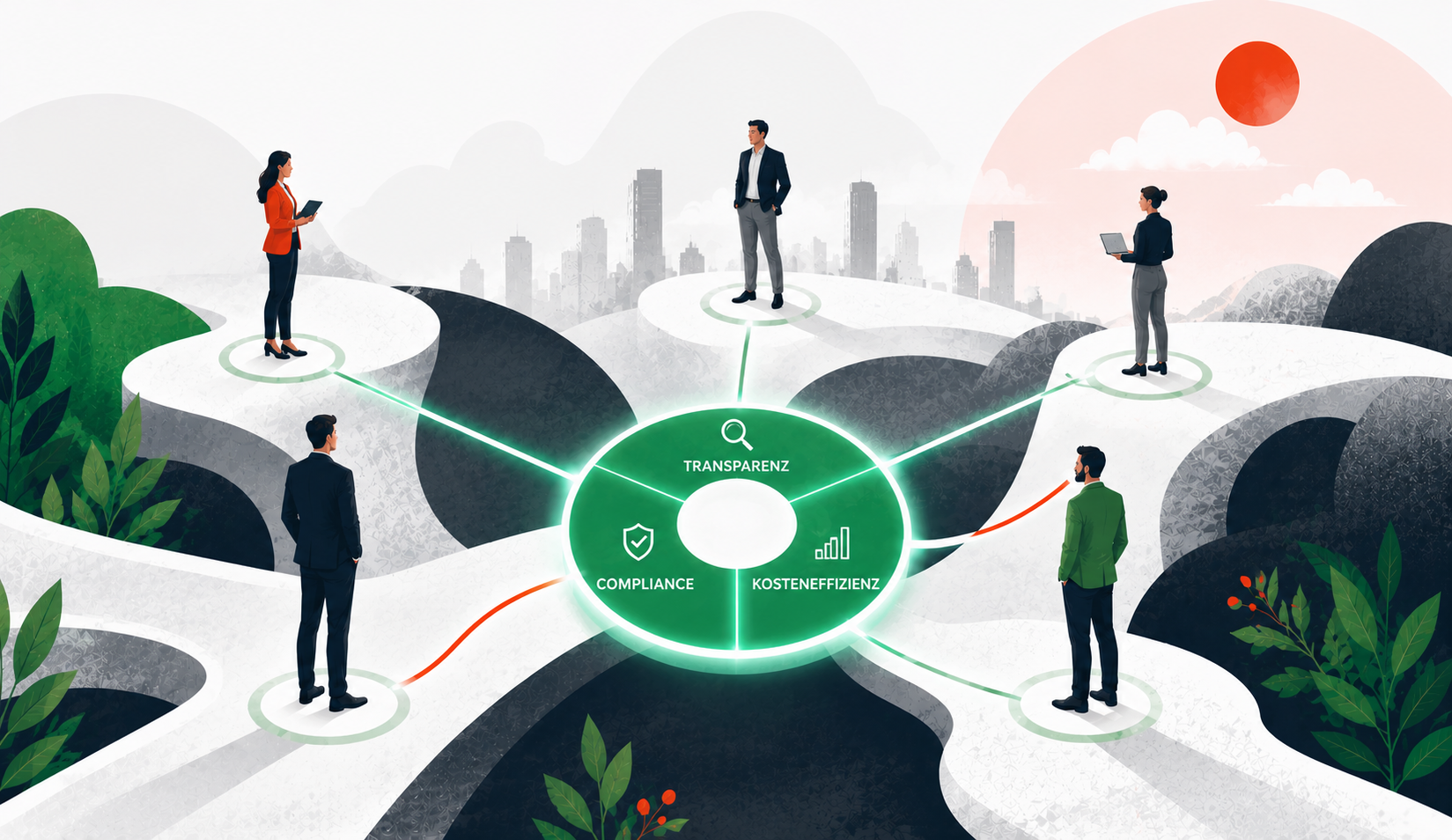
Communities are at the heart of modern software asset management
Those who rely solely on tools and processes in software asset management lose sight of the most important thing: people.
When SAM knowledge remains in silos
Software asset management is no longer an IT niche but a company-wide governance discipline with a variety of specialized roles: from the SAM manager and the license manager to interfaces with procurement, controlling/finance, and IT. Only through the collaboration of all stakeholders can license-compliant and economically efficient software usage be achieved.
The reality in many organizations, however, looks different. Especially in large corporations, these roles are spread across business units, locations, and legal entities — and often operate without systematic communication. The result is varying levels of knowledge, divergent process expertise, best practices that are not documented anywhere, and errors that have already occurred and been resolved in multiple places. This structural inefficiency translates into increased effort and avoidable costs.
As in any good relationship, it helps to talk to one another and listen to each other. What is needed is a SAM community — a space where SAM managers can share knowledge and experiences and solve challenges.
Three Success Factors for a Thriving SAM Community
1. Trust: The foundation of every functioning community
In many internal and external corporate communities, there is an underlying reluctance. Members are reluctant to share problems or challenges if they do not know or trust the other members of the community. This is understandable—the risk that sensitive information could be used against them in the future is too high.
So how can a trusting community be established?
In external or cross-organizational communities (e.g., the Cyber Security Competence Center or the Vendor Observer Competence Center by Voice e.V.), all members sign a non-disclosure agreement, thereby committing not to disclose sensitive information . For purely internal corporate communities, this measure is inappropriate — here, trust must develop through experience.
Especially in the beginning, it is advisable to establish a manageable core community before expanding the group. Ideally, the group’s key stakeholders already know each other personally. In-person meetings and, for example, a shared lunch can also contribute significantly to building trust. Additionally, moderators or community managers can seek out one-on-one conversations to understand why individual members are holding back and adjust the framework accordingly.
2. Needs-Orientation: Those Who Don’t Listen Lose Members
Many communities are filled with well-intentioned content — such as guides, tool demonstrations, webinars, etc.—without the members’ needs having been truly understood. The result: relevance declines for members, which ultimately leads to the community’s quiet demise.
One approach starts with a structured needs analysis: Which specific SAM topics are causing members the most headaches? Where is there a lack of guidance? These questions can be answered with a short survey and provide a foundation of topics for the community. Equally important are regular feedback loops, such as quarterly check-ins or anonymous short surveys, which assess whether the topics being covered are still relevant.
Especially in expert communities, experience shows that in-depth content addressing specific pain points generates significantly more engagement than general overview topics:
e.g., how do you handle vendor audits from Microsoft or SAP? How do you prevent the formation of shadow IT?
3. Recognizable Value: The Crucial Difference Between Activity and Added Value
Building, maintaining, and even participating in a community requires resources, primarily in the form of time. If the personal value for members provided by the community is not apparent, this will lead to a decline in participation.
The moderation team therefore bears an active responsibility. They must understand the group’s needs and steer the community in a way that addresses these needs.
Concrete added value becomes apparent when tangible work products emerge from the community, such as guides, process checklists, decision trees, or similar practical assets. It is important that these solve an actual problem or challenge in everyday work and originate from the community — in other words, they are not pre-determined. In this process, members who have already solved specific challenges can be highlighted as internal experts and share their experiences. This strengthens not only the community but also individual reputations.
Conclusion:
Complion’s practical experience in building and moderating SAM communities shows us that success depends significantly on trust among members, understanding members’ needs, and recognizing the benefits.
When these fundamentals are in place, they can help transform the culture within the organization.
Start small, listen to your members, and build a community that is truly needed. If you’d like to build a SAM community in your organization or further develop an existing structure, please contact us. We provide support with conception, moderation, and content direction.
Author: Jan Philipsen